Varanasi: A Journey Through India’s Holiest City
Varanasi, also known as Kashi or Benares, is not just a city—it’s a living, breathing symbol of India’s spiritual soul. Perched along the sacred banks of the Ganges River in Uttar Pradesh, Varanasi is believed to be one of the oldest continuously inhabited cities in the world and a place where the line between the divine and the earthly is beautifully blurred. To walk its ancient ghats, to witness the rituals of life and death coexisting side by side, is to truly experience India’s essence.
Whether you're a spiritual seeker, history enthusiast, or cultural traveler, a journey through Varanasi offers a deep, soul-stirring encounter unlike any other.
The Spiritual Heart of India
At the heart of Varanasi lies its most sacred element—the River Ganges, revered by Hindus as a goddess. Devotees from all over India come to bathe in the river, believing it will cleanse them of sins and bring salvation. The city is dotted with more than 80 ghats—stone steps leading into the river—each with its own story and spiritual significance.
Two of the most notable ghats are:
-
Dashashwamedh Ghat – The most prominent and lively, known for the grand Ganga Aarti performed here every evening with oil lamps, chants, and music.
-
Manikarnika Ghat – One of India’s most important cremation ghats, where funerals take place 24/7, based on the belief that dying in Varanasi ensures moksha (liberation from the cycle of rebirth).
To witness the sunrise from a boat ride on the Ganges is one of the most unforgettable experiences. As the first rays of light touch the ancient ghats, priests perform morning prayers, locals bathe in the river, and chants echo in the air—painting a mystical start to the day.
Temples That Tell Tales of Time
Varanasi is often called the City of Temples, and rightly so. It’s home to thousands of shrines, the most revered being the Kashi Vishwanath Temple, dedicated to Lord Shiva. This temple is one of the twelve Jyotirlingas, making it a pilgrimage site of immense significance.
Other important temples include:
-
Durga Temple (Monkey Temple) – Known for its vibrant red color and resident monkeys.
-
Tulsi Manas Temple – Built on the site where the saint-poet Tulsidas wrote the Ramcharitmanas.
-
Sankat Mochan Hanuman Temple – A popular shrine attracting devotees seeking protection and blessings.
These temples are not just places of worship but centers of cultural, spiritual, and social life, offering a peek into the timeless traditions of Hinduism.
Sarnath: Where Buddhism Began
Just a short drive from Varanasi lies Sarnath, where Gautama Buddha gave his first sermon after attaining enlightenment. The site features the Dhamek Stupa, the Ashoka Pillar, and the Mulagandha Kuti Vihar—all significant markers of early Buddhist history.
The Sarnath Museum houses ancient sculptures and relics, making it a worthwhile stop for history and archaeology enthusiasts. Sarnath offers a tranquil contrast to the chaotic vibrancy of Varanasi, making it an ideal afternoon excursion.
The Culture in the Chaos
Beyond its temples and ghats, Varanasi is a celebration of Indian art, music, and learning. The city has been a hub for classical Hindustani music, home to legendary musicians like Ravi Shankar and Bismillah Khan. It’s also a center for Banarasi silk weaving, known globally for its exquisite saris.
Wander through the narrow alleys of Old Varanasi, and you’ll find hidden shrines, tiny bookshops, street vendors selling chai in earthen cups, and artisans weaving magic with their hands. The city’s chaos has a rhythm—unplanned yet perfectly in tune with its centuries-old soul.
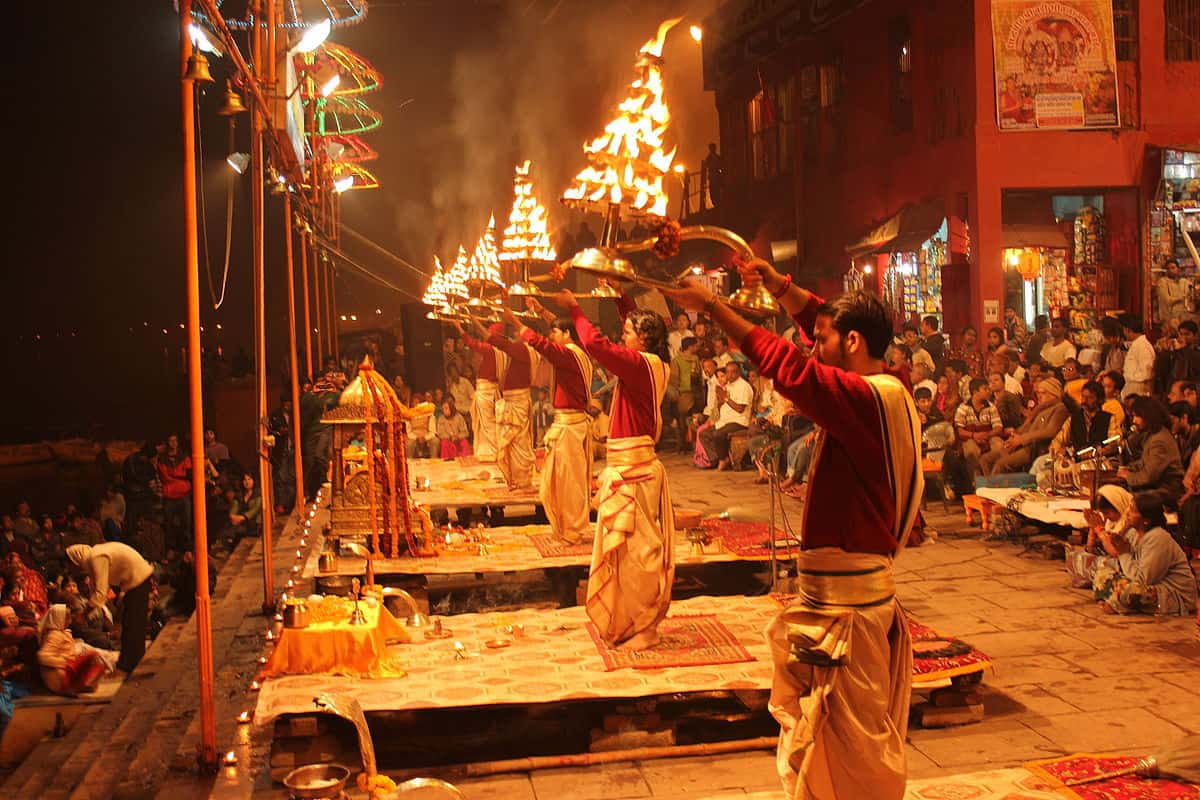 Ganga Aarti: A Night to Remember
As the sun sets, the Ganga Aarti at Dashashwamedh Ghat transforms the riverfront into a theater of devotion. Priests dressed in saffron robes move in synchronized patterns, holding flaming lamps as bells ring and conch shells blow. Crowds gather to watch, pray, and soak in the powerful spiritual energy.
You can watch the aarti from the ghat or, for a quieter experience, from a boat gently bobbing on the Ganges—either way, it’s a magical moment that stays with you long after you’ve left.